The finding
Should the UK extend its right to repair?
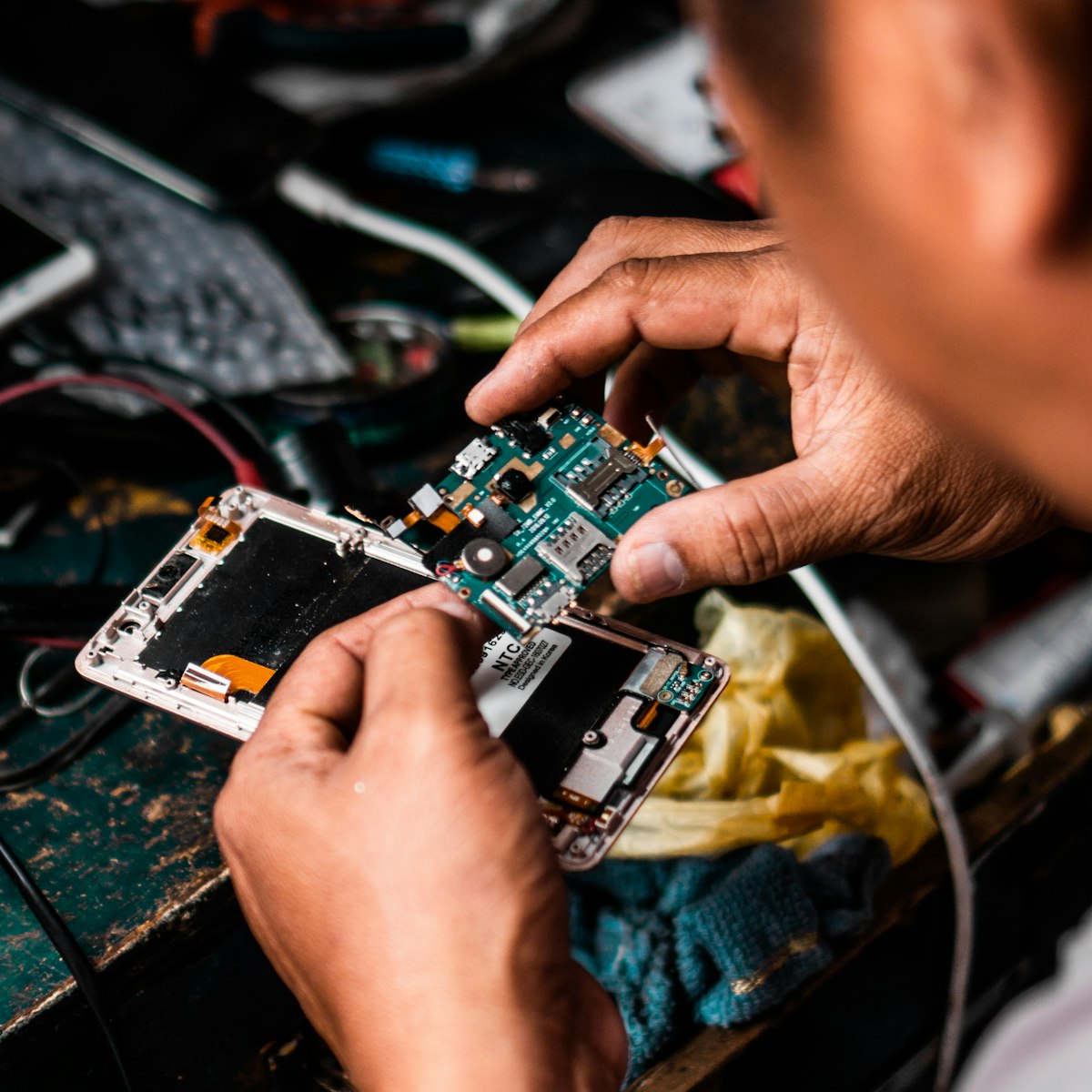
The UK is the world's 2nd-highest e-waste producer per person.
Photo: Clint Bustrillos
The UK's repair law protects washing machines and fridges — but not the phones and laptops we throw away the most.
The story
A law that protects fridges, not phones
What the law actually covers
The UK’s current rules — the Ecodesign for Energy-Related Products and Energy Information Regulations 2021 — make manufacturers stock spare parts for washing machines, dishwashers, fridges and TV screens for up to ten years. That’s real progress. But it stops there. Phones, laptops and tablets, the devices people replace most often, aren’t covered at all.
Why that gap matters
The UK was the world’s second-highest producer of e-waste per person in 2019, at 23.9kg each. Much of it doesn’t get recycled here — a large share is exported, legally or otherwise, to countries including Nigeria, Ghana and India, where it’s broken down without the facilities to do that safely. Cost is part of why people replace rather than repair: one industry estimate found 65% of people don’t get a broken phone fixed because repair fees are too high.
The case against
Manufacturers’ objections aren’t baseless. Stocking ten years of spare parts for every product is expensive, and if demand doesn’t materialise, someone pays for the unsold stock — likely the next customer, through a higher price. Apple has also pointed to safety and security: its “Error 53” lockout triggered when an iPhone detected a non-Apple replacement part.
The security argument is harder to defend than it sounds, though. The UK already has laws — the Computer Misuse Act 1990 among them — that cover anyone who actually tries to break into a device. And the most notable privacy breach surfaced in this research wasn’t caused by an independent repairer at all: in 2021, Apple paid a customer a settlement worth millions after its own certified repair technicians posted explicit photos taken from her phone online.
A middle path, if not a full rewrite
Short of extending the law, two smaller changes could help. French retailers already label new electronics with a repairability score, pushing manufacturers to compete on that measure. And repair cafés and online communities — iFixit, independent technicians sharing teardown guides — already let people learn to fix things themselves. But access to information only goes so far: separate research into appliance lifespans found that people’s motivation to bother with a repair matters as much as whether the instructions exist.
The catch
What this doesn't show
The source
Where this comes from
Every source used in the original research, so you can check any claim yourself.
By Roland Correia. Published 2 October 2026.